
Undergoing bunion surgery is a significant step toward relieving foot pain and improving mobility, but the recovery process requires careful attention to your footwear choices. Selecting the right shoes after bunion surgery matters for comfort, support and healing, while accommodating the changing shape of your foot during this sensitive period. In the UK, where daily life often involves walking and unpredictable weather, the right shoes can make a substantial difference to your recovery.
This guide explains why footwear matters after surgery, the features to look for, the styles we fit most often at our own workshop and showroom, and practical tips to support your recovery.
Why Footwear Matters After Bunion Surgery
Bunion surgery, whether a minimally invasive procedure or a more extensive correction, leaves your foot in a delicate state. The surgical site is often sensitive, and swelling can persist for weeks or even months. Shoes that press on the forefoot during this period can cause pain and discomfort, and may make it harder to stay mobile while you heal. The right shoes give your toes ample space, spread pressure across the foot, and offer a stable base underfoot.
In the UK, two further factors shape the choice. Wet pavements make a slip-resistant sole important, and many people rely on walking as everyday transport — so shoes need to stay comfortable over distance, not just for a few minutes at a time. When a clinician has advised a return to everyday footwear, the same principles apply to everyday shoes for bunions.

Key Features to Look For
- Wide, deep toe box. After surgery your toes need space so nothing rests on the operated joint. Extra depth also leaves room for dressings and for swelling that changes through the day.
- Cushioned sole. Cushioning softens the impact of each step and reduces the load reaching a healing forefoot.
- Adjustable fastening. Swelling varies daily. Touch-fastening straps, laces or a zip let you change the fit without taking the shoe off.
- Breathable materials. Natural leather or mesh allow airflow, which keeps the foot cooler and drier while a wound is still settling.
- Slip-resistant sole. Important on wet UK pavements, particularly while your balance and gait are still returning to normal.
- Lightweight build. Heavy shoes tire the foot and leg. A lighter shoe makes it easier to keep moving.
Your surgeon or podiatrist knows your procedure and your healing timeline — always check footwear choices with them first, especially in the early weeks.
TDO Therapy Styles for Recovery
We make our own footwear on orthopaedic lasts, and these are the four styles we most often fit for people recovering from bunion surgery:
- Cedar – Extra Wide Fit Sandals (910.PI) — a natural first step after surgery: the open design keeps pressure off the operated area, while long touch-fastening straps plus an adjustable heel strap adapt around dressings and swelling: women’s · men’s
- Ashby – Stretchy Shoes (616.06.20) — the soft stretch upper moulds around the forefoot instead of pressing on it: women’s · men’s
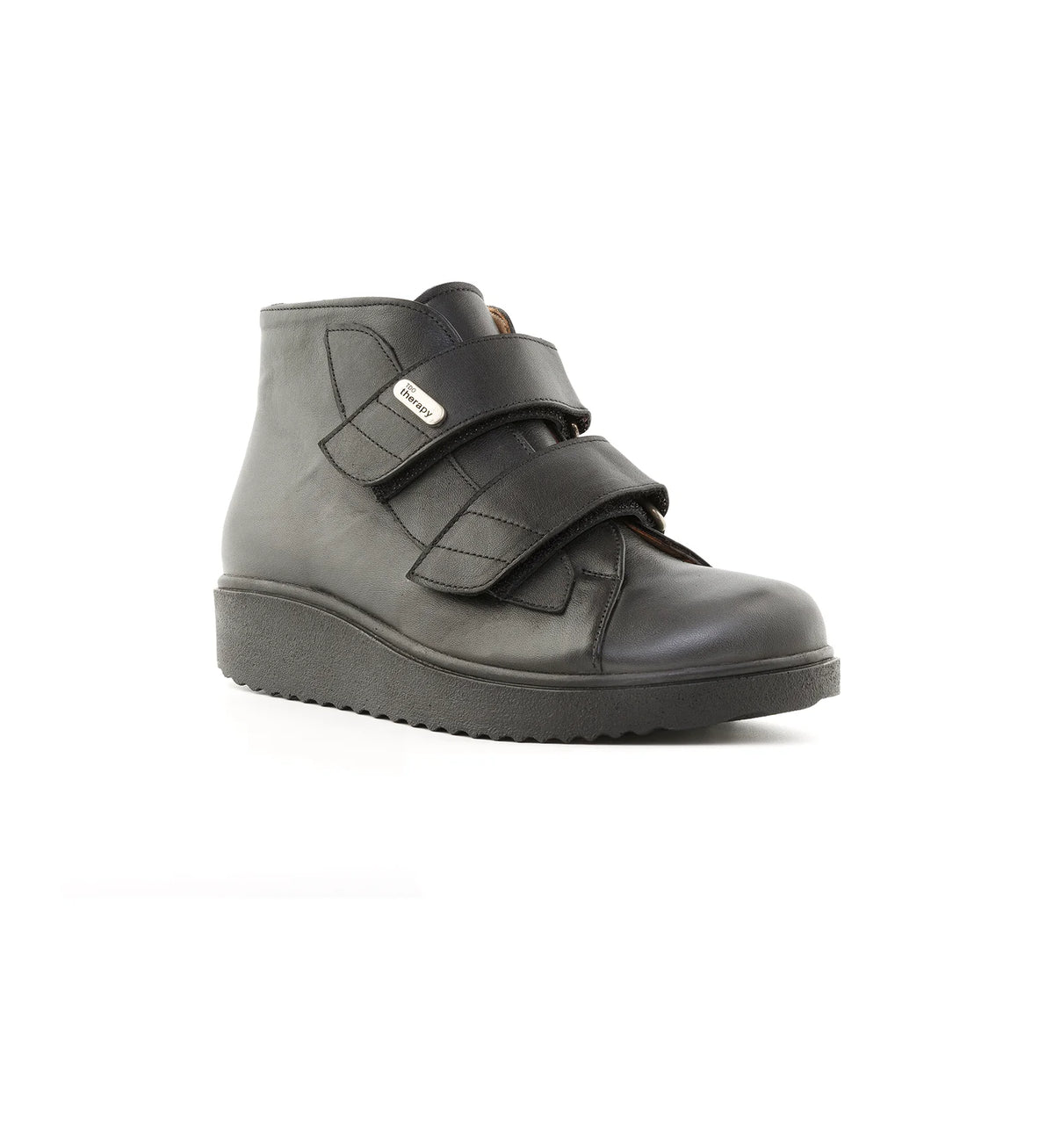
- Kendal – Extra Wide Fit Shoes (902) — the touch-fastening upper opens right out, so a sensitive foot can be placed in gently rather than forced in: women’s · men’s
- Cove – Extra Wide Fit Sandals (TD008.PI) — open forefoot with a closed heel that cups and supports the back of the foot: women’s · men’s
All four come in fittings up to 6E with removable insoles, so there is depth for dressings or your own orthotics. If you are unsure on sizing while swelling settles, our Fitting Guide explains the fittings — or book a free shoe fitting at our Farnham showroom and we will measure width and depth as well as length.
What About High Street Options?
Plenty of mainstream brands now offer wide fittings, and for a mild bunion with a straightforward recovery they may be all you need. What they rarely offer is the combination that matters most after surgery: genuine extra depth as well as width, a fastening that opens far enough to get a tender foot in, and a removable insole that frees up room for dressings.
If you are shopping the high street, judge any pair against the feature list above rather than the label — and be cautious with performance running shoes, which are built for propulsion rather than for protecting a healing joint.
Wearing and Caring for Your Recovery Shoes
- Start slowly. Wear them for short periods at first, then build up as swelling settles and comfort improves.
- Use your orthotics. If your podiatrist has prescribed insoles, take out the supplied footbed and use theirs.
- Keep them clean. Wipe with mild soap and water and let them air dry; this matters more than usual while a wound is healing.
- Check the fit daily. Look for rubbing or redness, and loosen the fastening as swelling changes through the day.
- Prepare for weather. A protector spray helps on leather; wet feet are uncomfortable and slow to warm up.
- Transition gradually. Recovery commonly takes 6–12 weeks. Check with your surgeon or podiatrist before moving back to your usual shoes.
FAQs
How soon can I wear regular shoes after bunion surgery?
Recovery timelines vary, but many people need 6–12 weeks before moving back to their usual shoes. It depends on the type of surgery, how healing is going, and your surgeon’s advice. Until you are cleared, stay with supportive shoes that have a wide toe box and cushioning.
What should I look for in a shoe after bunion surgery?
Depth as well as width, a fastening that opens wide enough for a tender foot, a removable insole, cushioning, and a slip-resistant sole. Judge shoes on those features rather than on the brand name.
Can I wear sandals during recovery?
Often yes, once initial healing is done (commonly around 4–6 weeks), provided they have adjustable straps and a supportive footbed. Open-toe, orthotic-friendly designs such as our Cedar 910.PI keep pressure off the operated area. Ask your podiatrist about timing.
How do I know the fit is right?
You want ample toe space (about a thumb’s width), no rubbing on the surgical site, and room for swelling. Shoes should feel secure but not tight, with an adjustable fastening. Wear them for short periods first and watch for discomfort or redness.
Where can I buy shoes for post-bunion recovery in the UK?
Specialist orthopaedic footwear retailers are the best starting point, because they measure width and depth rather than length alone. We handmake our own range and offer free fittings at our Farnham showroom — or you can order online and exchange free if the fitting is not right.
Recovering from bunion surgery is easier when you have the right footwear. Our collection of shoes for bunions provides the space, cushioning and support that healing feet need.