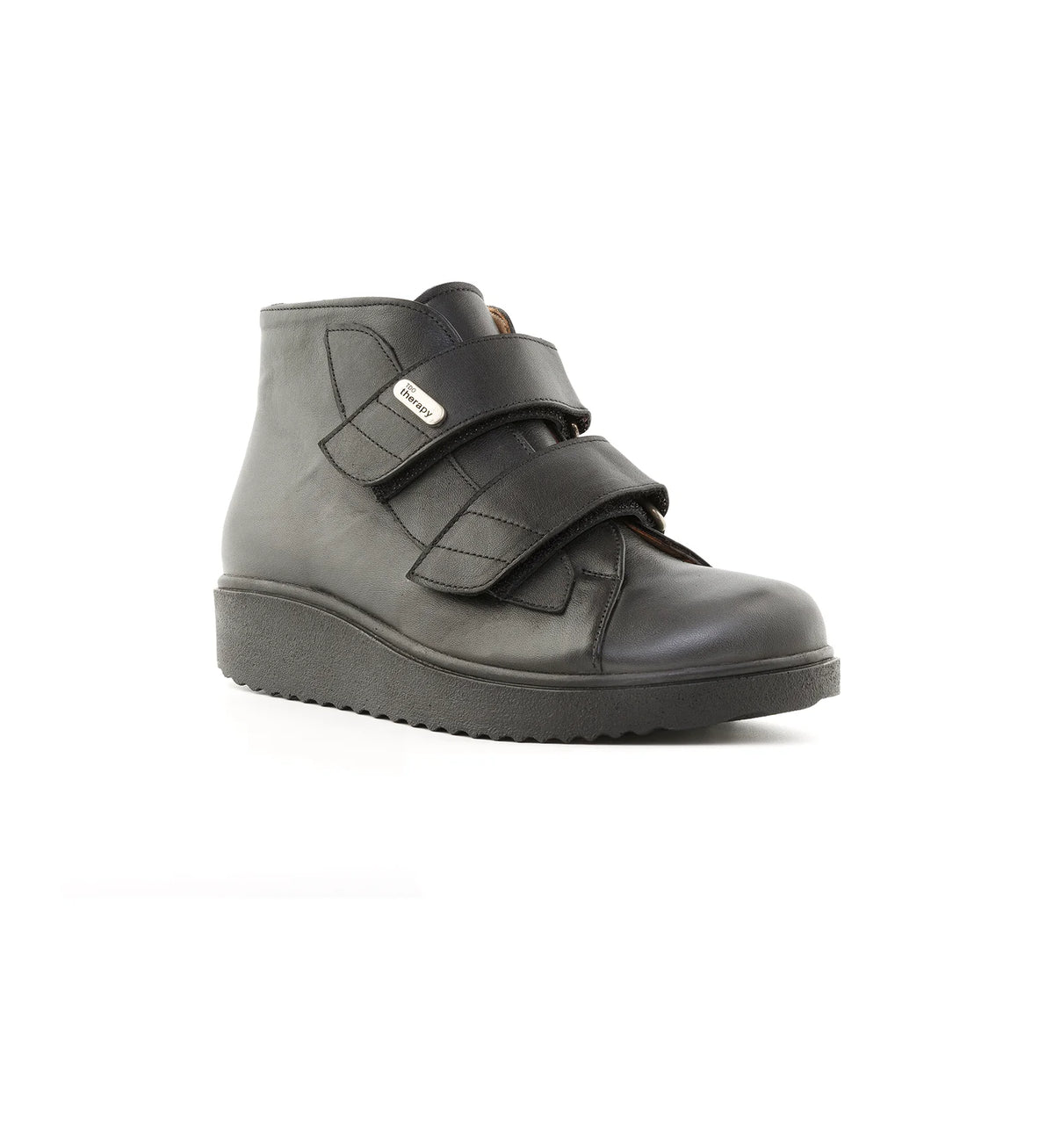

Touch-fastening shoes can be easier to put on if tying a knot is awkward or time-consuming. Lace-ups can suit you better if you like to adjust the fit at several points along the upper. For wide feet, either can work: the better choice is the shoe that has enough room, opens sufficiently and stays comfortably in place when you fasten it.
Shoes often called “Velcro shoes” use hook-and-loop straps, also known as touch-fastening straps. Here is how to compare them with laces while keeping the fit of the whole shoe in mind.
Velcro vs lace-up shoes at a glance
| What matters | Touch-fastening straps | Laces |
|---|---|---|
| Handling | Pull, position and press the strap. | Pull the lace ends and tie a knot. |
| Opening | Release each strap fully. | Loosen enough rows to open the upper. |
| Adjustment | Adjust where each strap crosses. | Adjust through several lace rows. |
| Secure hold | Check strap reach and engagement. | Check even tension and knot security. |
| Room for wide feet | Depends on the shoe's width and depth. | Depends on the shoe's width and depth. |
Which fastening is easier to use?
Touch-fastening: fewer steps, but try the actual strap
A strap usually needs fewer separate actions than a tied lace. You release it, open the shoe, then pull it across and press it into place. That can make everyday dressing simpler if you prefer a straightforward closure.
However, “easy fastening” should describe your experience with the shoe. Check that you can grasp the strap, pull it to a comfortable position and press the fastening surfaces together. A strap that barely reaches, or needs more effort than you expected, may not suit you. Two straps also mean two adjustments, which some people welcome and others find unnecessary.
Laces: more adjustment, with more handling
Laces let you alter tension along several rows. You may prefer a little more room towards the front of the upper and a closer hold further back, depending on the design. Take time to distribute the tension before tying the knot.
The trade-off is handling: loosening the rows, pulling the ends and tying them can take longer. Test the complete routine, including taking the shoes off. Leaving laces tied and forcing your foot into the opening does not tell you whether the shoe is easy to use as designed.
Check width and depth separately from the closure
Width is the space across your foot; depth is the room above it. A generous opening helps you get into a shoe, but it does not prove that there is enough room once it is fastened. Likewise, releasing a strap or loosening laces cannot turn a narrow shoe into a wider model.
Look at the individual product's fit description, then check how it feels with your usual socks and intended insoles. Width labels should be read in the context of that range: a women's regular EE model and a men's wide 4E model are different specifications. The shape used to make the shoe, often called its last, matters too.
If you need more room above the foot, our high instep vs high arch guide explains the difference and what to check when trying shoes.
If your fit changes through the day, our guide to adjustable-strap shoes for swollen feet covers that fitting question in more detail.
Dorset County Hospital's general shoe advice includes laces, hook-and-loop fastenings and buckles as suitable closures for keeping a shoe in place.
TDO examples: compare the specifications as well as the fastening
Glide: leather lace-ups
The leather Glide lace-ups illustrate why the model matters. Women's Glide 606-W has a regular EE fit on the M last. Men's Glide 606-M has a wide, deep 4E fit on the K last. Both have removable 6 mm insoles.
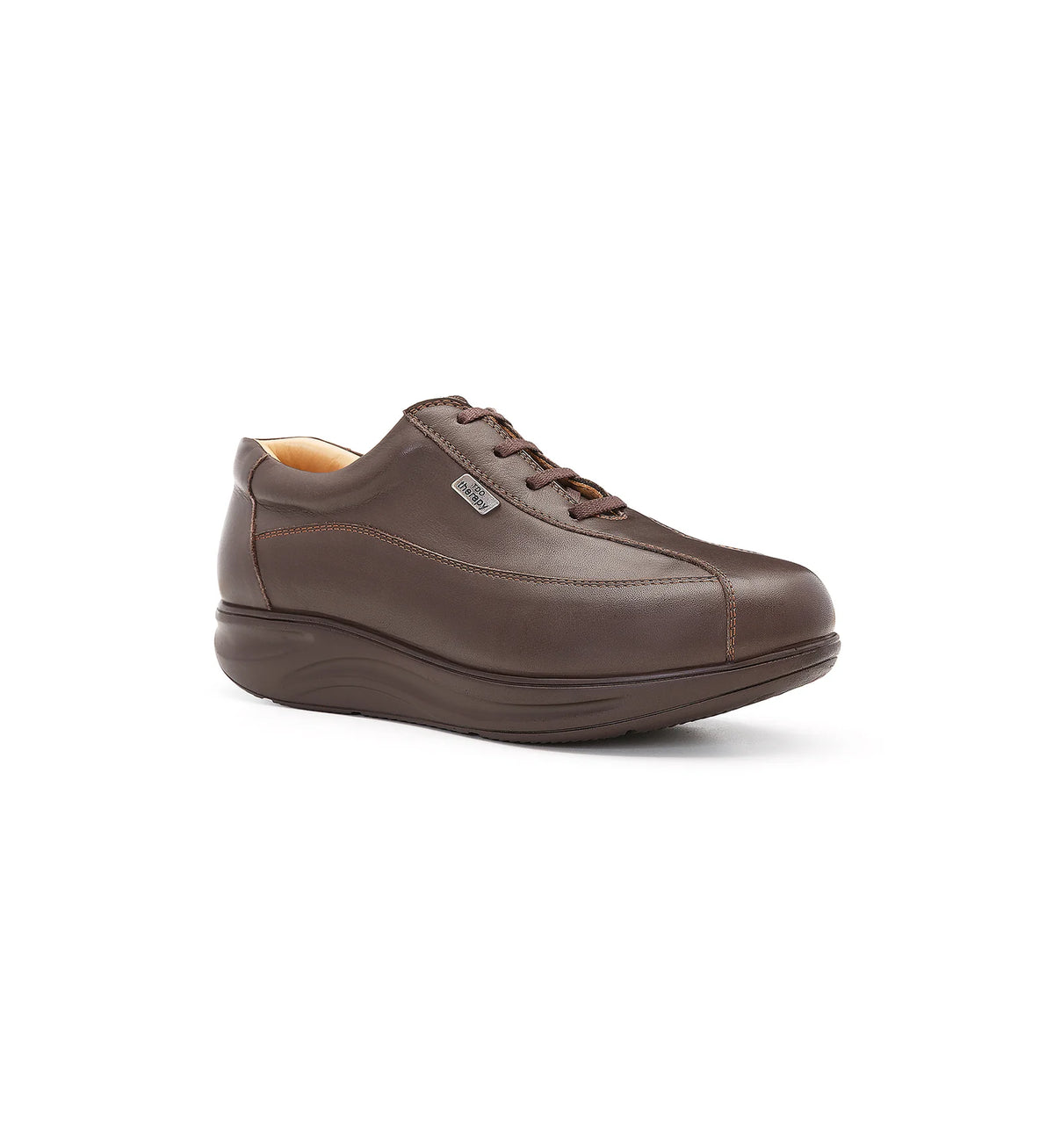
Ashby: one adjustable strap
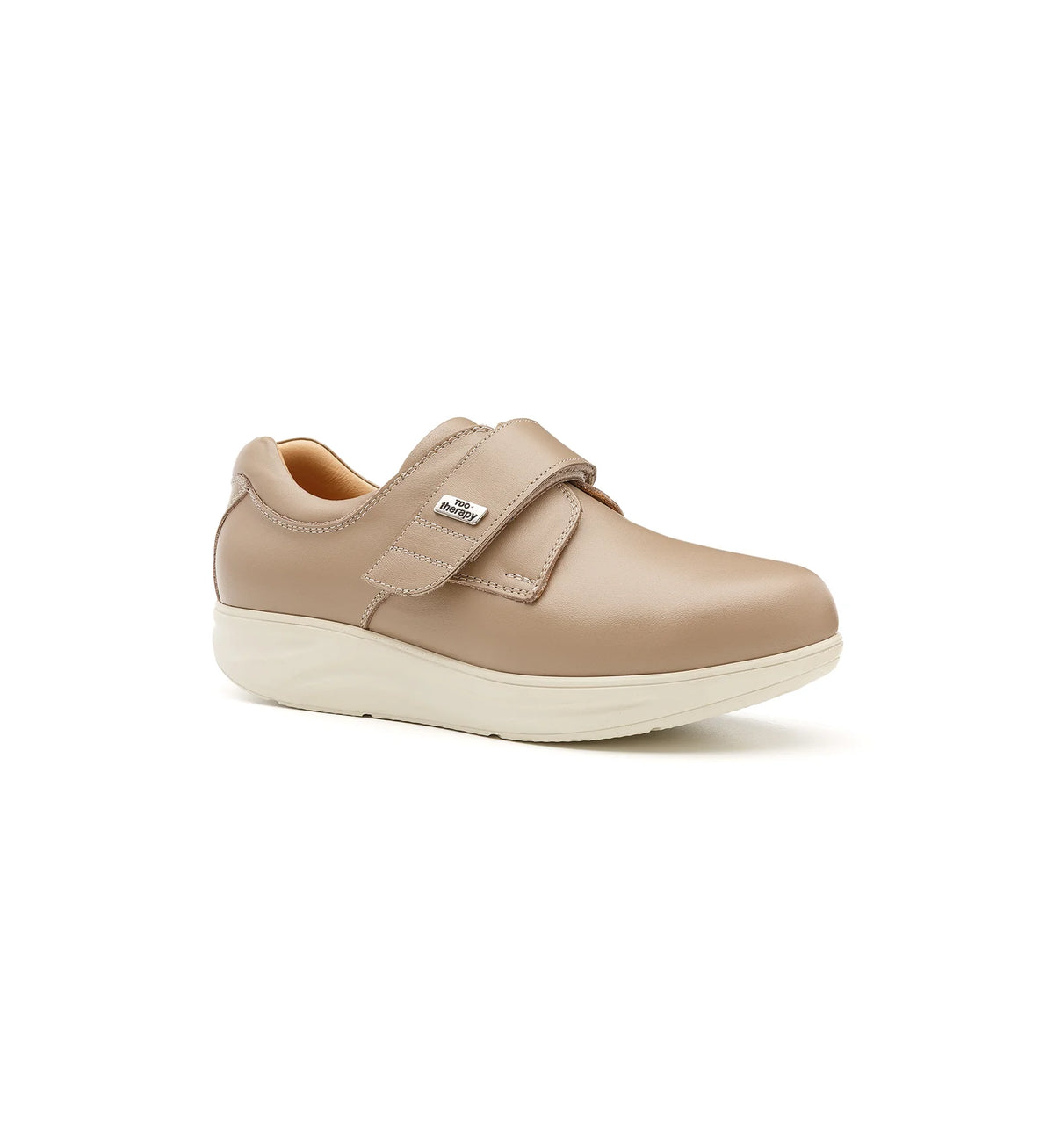
If you prefer a single touch-fastening strap, the calf-leather Ashby offers that closure with removable insoles. Women's Ashby 616-W is regular EE on the M last; Men's Ashby 615-M is wide and deep 4E on the K last. Choosing the strap does not, by itself, mean choosing extra width.
For a closer comparison of the fastening, men's Glide and men's Ashby both use the 4E K last. Try each to judge the laces and strap while keeping that shared fit specification in mind.
Marlow: two straps with a different fit specification
For a different fit specification, women's Marlow and men's Marlow 603.20 use the H last, with extra-wide, extra-deep 6E fit, two touch-fastening straps, leather uppers and removable 10 mm and 6 mm insoles. Their fit differs from Glide and Ashby in more than the closure.
Kendal: two straps and a full-opening upper
Women's Kendal 902-UNI and men's Kendal 902-M combine an extra-wide, extra-deep 6E H-last fit with two independently adjustable touch-fastening straps. The upper opens fully, so compare how easy it is to get your foot in and then fasten it comfortably. As with Marlow, check the internal room as well as the opening.
A five-step indoor try-on checklist
- Prepare your usual setup. Wear the socks you intend to use and try both shoes. Use your intended insole setup, checking the product information before changing any removable layers.
- Open the shoe fully. Release every strap or loosen enough lace rows to move the tongue and upper. Notice whether you can put your foot in without forcing it through the opening.
- Check the room. Assess the space across the forefoot, around the toes and above the foot. Your toes should not feel crowded, and the upper should not need to be pulled hard across your foot.
- Fasten it yourself. Adjust to a comfortable hold using the method you would use each day. Check that straps engage properly or that you can tie the laces securely, without excessive tightening.
- Move and repeat. Walk around indoors, turn and sit down. Check for unwanted heel movement or pressure from the closure. Take the shoes off and put them on again to test how manageable the routine feels.
Compare both feet and both fastening options where possible. TDO's fitting advice can help you review the fit before choosing a model.
Three everyday situations
You want a quicker morning routine
Touch-fastening may suit you if the main difficulty is dealing with loose lace ends and knots. Try opening and closing the strap while seated in your usual dressing position. Speed is useful only if you can also get the fit right.
You like to fine-tune the upper
Choose laces if adjusting several parts of the upper matters to you and tying them feels manageable. Spend a moment loosening and retensioning the rows during the try-on. Check that the adjustment you prefer still gives a comfortable hold.
You need a larger opening
Compare how far each actual shoe opens, whichever fastening it uses. A two-strap design may offer useful access, while a lace-up can also open well when sufficiently loosened. Judge the opening, tongue and upper together, then check the internal room separately.
For a closer look at openings and fastenings, read our guide to easy-entry shoes.
Frequently asked questions
Are touch-fastening shoes always wider than lace-ups?
No. The fastening and the fit specification are separate features. Check the stated width, depth and model details before comparing how the closure works for you.
Can laces give a secure hold on wide feet?
They can, provided the shoe has enough room and you can adjust and tie it comfortably. Tightening the laces harder is not a solution to a shoe that does not fit.
Is one strap better than two?
One strap means fewer closures to handle. Two give you separate adjustment points. Try both if possible: the location and reach of the straps matter as much as their number.
Does a removable insole change the width?
Removing an insole changes the space inside the shoe, but it does not change the shoe's stated width or last. Check the product's instructions and assess the fit with the setup you intend to wear.
Which should I choose first?
Start with enough width and depth, then choose the fastening you can manage comfortably. Compare the individual models in TDO's women's collection or men's collection, and use the indoor checklist to make the final decision.