
Leg length difference — also known as leg length discrepancy — occurs when one leg is shorter than the other. While it may sound minor, even a 1cm difference can significantly affect posture, walking mechanics, and joint health.
Many people try to manage the issue by inserting simple heel lifts into their shoes. Others buy larger shoes to “make space” for a lift.
Unfortunately, these quick fixes often create new problems instead of solving the underlying imbalance.
True correction is not about adding height.
It is about restoring alignment safely and structurally.
Understanding Leg Length Discrepancy
Leg length difference can develop due to:
- Congenital conditions
- Previous fractures or surgery
- Hip replacement
- Arthritis and joint degeneration
- Spinal or neurological conditions
- Pelvic imbalance
In some cases, the difference is structural (bone length).
In others, it is functional (caused by posture or muscular imbalance).
When significant, the body compensates by:
- Tilting the pelvis
- Rotating the spine
- Overloading one knee
- Increasing strain on one hip
- Creating lower back tension
Over time, these compensations can accelerate joint wear and discomfort.

Heel Lifts vs External Shoe Build-Ups
This is where many people make a mistake.
An internal heel lift placed inside a standard shoe may help in very small differences (usually under 1cm). However, once correction becomes larger, internal lifts can:
- Reduce shoe depth
- Cause heel instability
- Push the foot forward
- Increase forefoot pressure
- Compromise balance
For corrections around 1.5cm–2cm or more, an external shoe build-up is often the safer and more stable option.
An external build-up:
- Maintains full internal shoe space
- Preserves foot stability
- Keeps the heel securely supported
- Distributes height evenly
- Reduces compensatory strain
It becomes part of the shoe — not an unstable add-on.
Why Structure Matters as Much as Height
Adding height without structural support can increase instability.
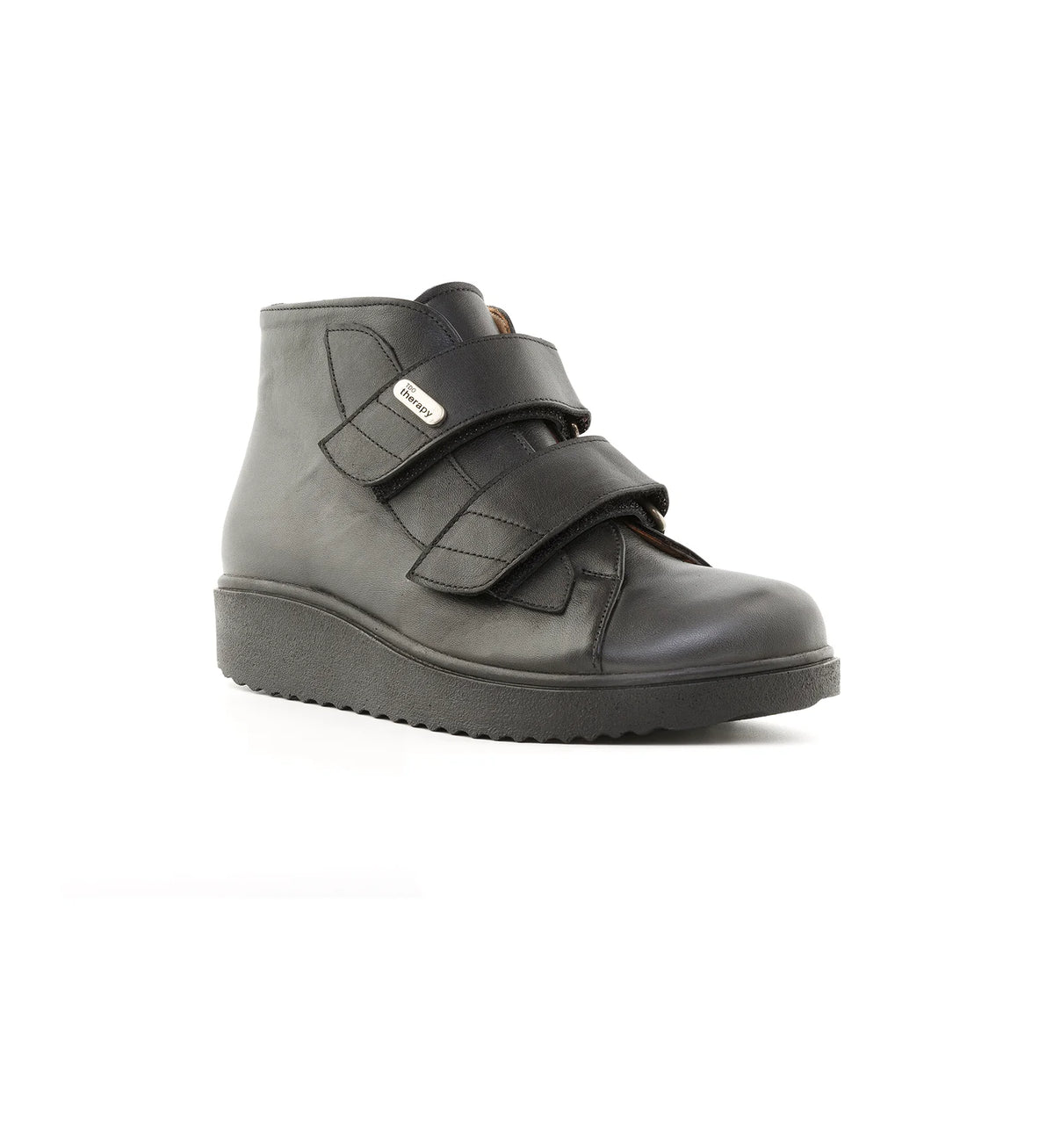
This is why correction works best when applied to properly constructed orthopaedic footwear with:
- Firm heel counters
- Stable sole units
- Adequate internal depth
- Supportive insoles
- Shock-absorbing outsoles
- Rocker sole design where appropriate
Without structure, raising one side may increase wobble and discomfort.
Balance is not just vertical — it is biomechanical.
What an Orthotist Looks For in the Shoe Itself
A build-up is normally applied by an orthotist or a specialist shoe technician, which means the shoe has to be suitable for modification before any height is added. Not every shoe is.
“I have been using TDO footwear for my patients for over 10 years now. The quality of the leather and stitching is excellent which is especially important for patients with diabetes and insensate feet. The absence of stitching in the toe box, the generous space allowance, removeable insole, stable sole unit with a rocker sole and a range of widths and depths and fastenings are particular features which make them ideal for those who need more than a high street purchased shoe but are not yet in the category of bespoke footwear. The sole unit is also suitable for adding wedges, rockers and raises as needed.”
Lucy Best, Orthotist — Hampshire Orthotics Ltd
In practice this means a sole unit solid enough to carry a build-up without flexing, a firm heel counter, and enough internal depth that the foot is not pushed forward once the correction is in place.
If you are being fitted for a raise, it is worth checking the shoes with your orthotist before ordering, so they can confirm the sole unit is suitable for the modification you need.
Signs You May Need Assessment
You may benefit from professional evaluation if you notice:
- Uneven hips or shoulder height
- Recurrent lower back pain on one side
- Knee pain predominantly on one leg
- Faster wear on one shoe sole
- Feeling unstable while walking
- A visible difference in leg length
Not every difference requires correction.
But ignoring a significant imbalance can contribute to long-term strain.
If you are weighing up whether a modified ready-made shoe is enough, our guide to bespoke orthopedic shoes explains where the line usually falls. You can also browse women’s and men’s footwear, or see the Fitting Guide if you are unsure which width you need.