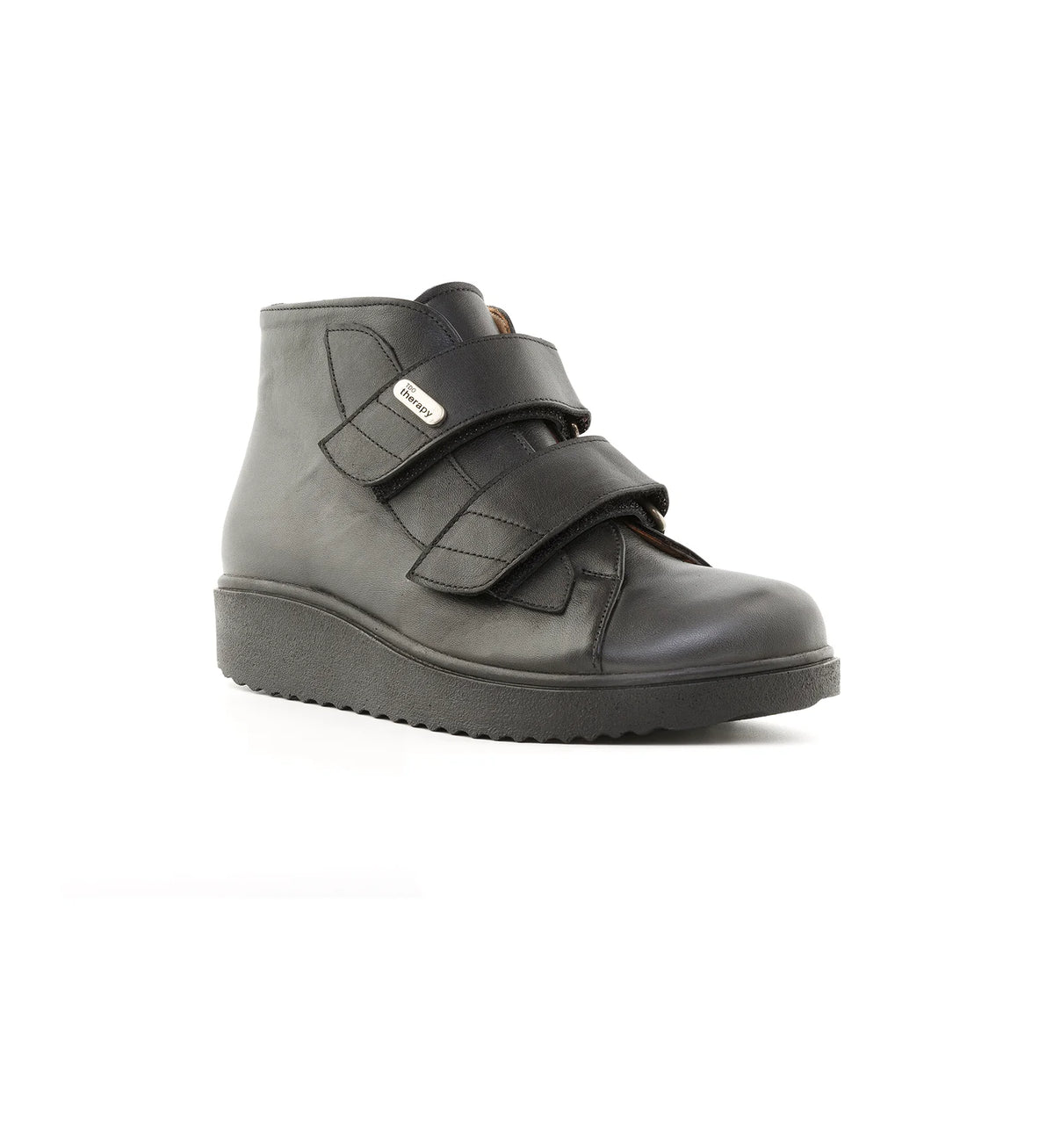

Orthopaedic shoes for men have changed. What was once bulky, obviously medical footwear is now a range of styles you would wear without a second thought — while still doing the structural work your feet need. This guide covers what actually makes a shoe orthopaedic, how to choose for different occasions, and which of our men’s styles suits what.

What Makes a Shoe Orthopaedic
The word gets used loosely, so it is worth being precise. A genuinely orthopaedic shoe is built on a last shaped for the foot rather than for fashion, and it gives you four things a comfort shoe usually does not:
- Depth as well as width. Width alone does not help if the shoe is shallow — the pressure just moves to the top of the foot.
- A seam-free lining. Internal stitching is what rubs. Removing it matters enormously if sensation is reduced.
- A removable insole. Take the footbed out and there is room for a prescribed orthotic.
- A structured sole. Firm enough to hold the foot, with a rocker profile that carries you through the step rather than making the forefoot do the work.
Here is the distinction that matters most, and it is the opposite of what most people assume: a comfort shoe gives way to the foot, while an orthopaedic shoe holds its shape and supports the foot from the inside. Softness is not support.
Choosing by Occasion
Work and formal wear
A classic Oxford still reads as a dress shoe even when it is built on an orthopaedic last. The Windsor 208-M is our lace-up option — handmade calf leather, removable anatomic insole, padded heel and tongue, in an EE fitting. Laces also give you the most control over fit across the instep.
Smart casual and colder months
The Chelsea 413-M is a Chelsea boot with elastic side panels — no laces or straps to fasten, so it goes on easily, while the cushioned sole and wide fit do the supportive work underneath.
Everyday wear
For most days, the choice is between two shapes. The Glide 606-M is our classic leather rocker shoe in a 4E fitting. The Ashby 615-M takes a plain front with a single strap — nothing stitched across the toe joint, which is what you want with arthritis, bunions or sensitive skin.
Walking and active days
The Flex 609-M is a lightweight cushioned trainer for distance, and the Marlow 603-M a smarter trainer with two straps — easier if grip or dexterity is limited. For warm weather, the Glide 611.09-M uses a breathable mesh forefoot.
When you need more room
If your feet swell, or you wear an orthotic or brace, the 6E fittings give two sizes more width and depth than regular: Kent 201.20-M for a smart lace-up, Ashby 615.20 for everyday, and Kendal 902-M when the shoe needs to open right out to get the foot in.
How to Judge Any Pair
Whether you buy from us or elsewhere, four checks tell you more than the marketing does:
- Does the insole come out? If not, there is no room for an orthotic and probably not enough depth either.
- Run a hand inside. Feel for seams across the toes and along the sides.
- Twist the shoe. It should resist. A shoe that wrings out like a cloth is not supporting anything.
- Check width AND depth. Plenty of “wide fit” shoes are wide and shallow, which is the wrong half of the problem.
Fit should be right on day one. Orthopaedic footwear does not need breaking in — a shoe that rubs at the start will still rub in a fortnight.
Getting the Fitting Right
UK sizes tell you length only, and length is the least useful measurement here. Our fittings run from EE (regular) through 4E to 6E (extra wide and extra deep), and the right one depends on the girth of your foot rather than its length. Our Fitting Guide explains how to measure, or you can book a free fitting at our Farnham showroom where we measure width and depth as well.
One detail worth knowing: our regular EE lasts carry the strongest rocker sole, while the extra-wide .20 fittings have a gentler rocker tuned more towards stability. So the widest shoe is not automatically the best shoe — it depends what you need from it.
Caring for Them
- Clean regularly — a damp cloth for everyday dirt, leather cream every month or so.
- Air dry away from radiators; direct heat cracks leather.
- Rest them. Ideally give a pair a day off after two days of wear so the materials recover.
- Replace the insole when the cushioning flattens — usually before the shoe itself is worn out.
FAQs
Can orthopaedic shoes be worn every day?
Yes — they are built for it. All-day wear is exactly where the support features earn their keep.
Will they suit any foot condition?
They cover a wide range — plantar fasciitis, bunions, flat feet, neuropathy, arthritis. But the right style varies by condition: a plain front for sensitive skin, extra depth for swelling, a stronger rocker for a stiff big toe joint. If you are under podiatry care, bring their advice and any prescribed insoles to a fitting.
Do they still look like medical shoes?
Not any more. A leather Oxford or Chelsea boot on an orthopaedic last looks like a leather Oxford or Chelsea boot — the construction is what differs, not the appearance.
How long should a pair last?
With regular wear, around 12 months before the sole and cushioning need reviewing. Rotating two pairs extends both.