
Introduction
When your shoes start feeling uncomfortable, the simplest solution seems obvious: buy a bigger pair.
Many people assume that if their feet hurt, their shoes feel tight, or their toes feel restricted, moving up a size will solve the problem.
Sometimes it may provide temporary relief.
However, buying larger shoes often treats the symptom rather than the cause.
In reality, many foot problems are caused by issues that have little to do with shoe length. Width, depth, support, stability, toe box shape, swelling, and foot structure all play a major role in how footwear feels and functions.
This is why many people continue to experience discomfort even after moving to a larger size.
Understanding the difference can help you choose footwear that truly supports your feet rather than simply giving them more space.
Why People Buy Bigger Shoes
Most people do not intentionally choose the wrong footwear.
Instead, they experience symptoms such as:
- tightness around the toes
- pressure on the forefoot
- rubbing on the sides of the foot
- swelling throughout the day
- discomfort while walking
The natural reaction is to assume the shoe is too small.
As a result, many people purchase a larger size without identifying what is actually causing the discomfort.
Unfortunately, the real issue is often something else entirely.
Length Is Only One Part of Shoe Fit
A shoe is not simply defined by its length.
Proper footwear fit involves multiple factors, including:
- length
- width
- depth
- internal volume
- toe box shape
- heel fit
- support structure
Increasing length only addresses one of these elements.
If the underlying issue is width, depth, swelling, or foot mechanics, a larger size may not improve comfort at all.
The Problems Larger Shoes Can Create
Buying bigger shoes can introduce several new problems.
Heel Slippage
When a shoe becomes too long, the heel often loses secure contact with the back of the shoe.
This can lead to:
- slipping while walking
- instability
- friction around the heel
- reduced walking confidence
Many people mistake heel slippage for normal movement when it is actually a sign of poor fit.
Increased Friction
A shoe that is too large allows the foot to move excessively inside the footwear.
This movement can increase rubbing and create pressure points in unexpected areas.
Over time, this may lead to:
- discomfort
- irritation
- hotspots
- reduced walking comfort
Reduced Stability
Footwear should help control movement, not allow excessive motion.
When shoes are too large, the foot may slide within the shoe during walking.
This can reduce:
- balance
- stability
- walking efficiency
- confidence on uneven surfaces
For older adults, this can be particularly important.
Poor Pressure Distribution
Supportive footwear helps distribute pressure across the foot.
When a shoe is too large, pressure may become less evenly distributed, causing certain areas to work harder than others during walking.
When the Real Problem Is Width
One of the most common fitting mistakes is confusing width problems with length problems.
Many people purchase larger shoes when what they actually need is a wider fitting.
Signs you may need more width rather than more length include:
- pressure on the sides of the foot
- rubbing around bunions
- toe crowding
- discomfort across the forefoot
In these situations, a wide fitting shoe is often a better solution than a longer shoe.
When the Real Problem Is Depth
Depth is even more commonly misunderstood.
Many people assume a shoe feels tight because it is too short.
In reality, the issue is often insufficient depth.
Signs you may need additional depth include:
- pressure on the top of the foot
- difficulty fitting orthotics
- discomfort when swelling increases
- tightness across the instep
Extra depth footwear provides more internal volume without unnecessarily increasing shoe length.
For many people, this creates a much more comfortable fit.
Why Swollen Feet Need More Than Bigger Shoes
Swelling rarely affects only one dimension of the foot.
As feet swell throughout the day, they often require:
- additional width
- additional depth
- adjustable fastening
- pressure reduction
A longer shoe does not solve these issues effectively.
In many cases, properly fitted extra-depth footwear performs far better than simply moving up a size.
The Impact on Walking Mechanics
The relationship between footwear and walking is often overlooked.
When shoes are too large:
- the foot may move excessively
- stride efficiency may decrease
- stability may be reduced
- fatigue may increase
The body often compensates for poor fit without the wearer realising it.
Over time, this may affect comfort not only in the feet, but also in the ankles, knees, hips, and lower back.
What Podiatrists Usually Look For
When assessing footwear, podiatrists rarely focus on size alone.
Instead, they consider:
Overall Fit
The shoe should accommodate the foot comfortably without excessive movement.
Width
The foot should not feel compressed across the forefoot.
Depth
There should be adequate space above the foot and around any orthotic devices.
Heel Security
The heel should remain stable during walking.
Support Structure
The shoe should help guide natural movement rather than allowing uncontrolled motion.
These factors are often more important than simply choosing a larger size.

Who Is Most Likely to Buy Shoes That Are Too Big?
Certain groups are particularly likely to size up unnecessarily.
These include:
- people with swollen feet
- individuals with bunions
- orthotic users
- people with diabetes
- those with arthritis
- older adults experiencing changes in foot shape
In many of these cases, specialised footwear provides a better solution than increasing shoe size.
The TDO Therapy Approach
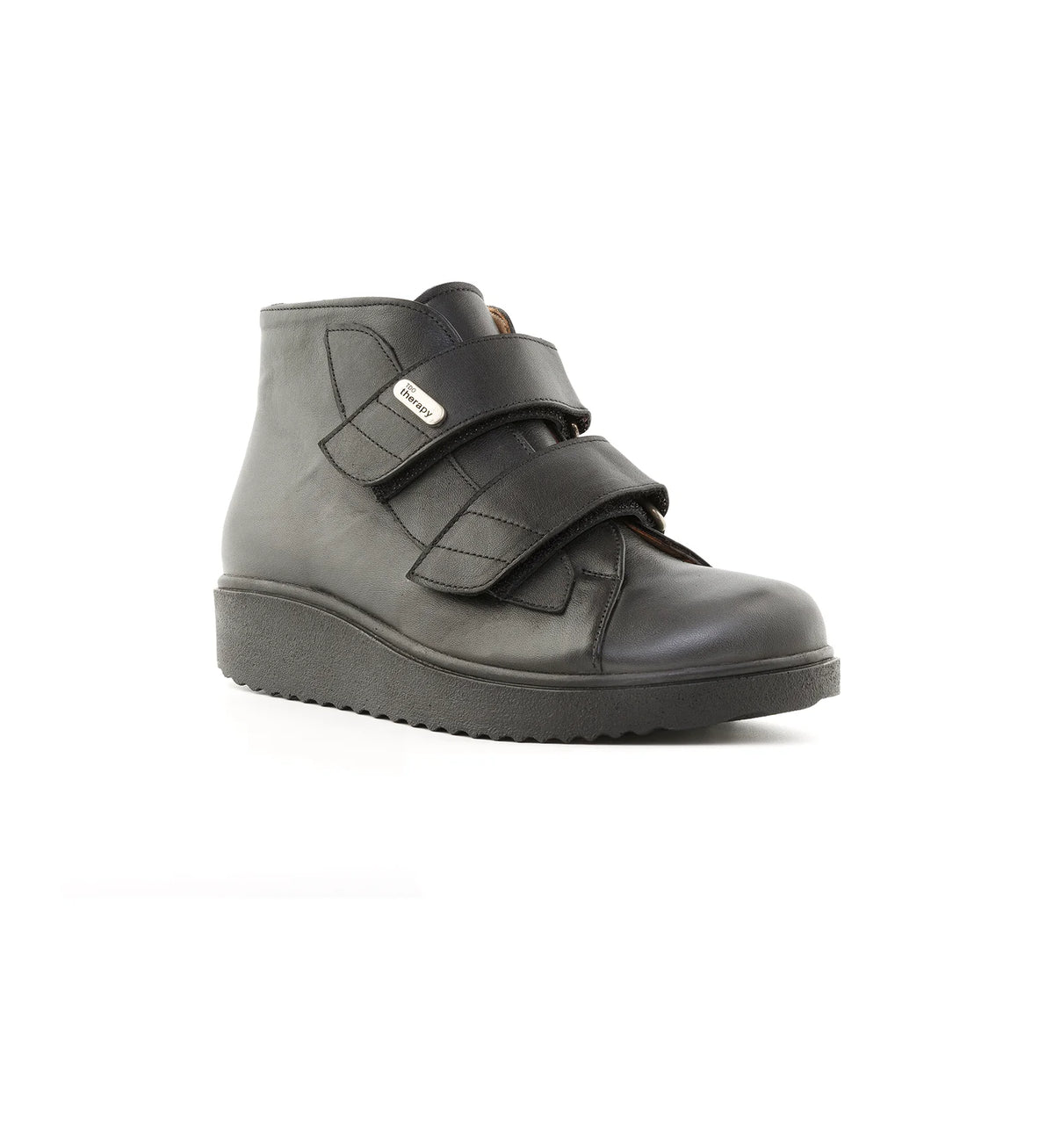
At TDO Therapy, footwear is designed around proper fit rather than simply providing additional length.
Our footwear may include:
- wider fitting options
- extra depth construction
- supportive sole units
- rocker bottom technology
- seam-free interiors
- removable insoles
- adjustable fastening systems
- soft natural leather uppers
The goal is to improve comfort through proper support, fit, and pressure management rather than relying on larger shoe sizes.
FAQ
Should I buy bigger shoes if my feet hurt?
Not necessarily. The issue may be width, depth, support, or foot shape rather than shoe length.
Why do bigger shoes still feel uncomfortable?
A longer shoe may not address the actual cause of discomfort and can sometimes create instability and friction.
How do I know if I need wider shoes instead?
Pressure around the sides of the foot, bunions, and toe crowding often indicate a width issue rather than a length issue.
What is the difference between extra depth and larger shoes?
Extra depth increases internal space above the foot, while larger shoes primarily increase length.
Can shoes that are too large affect walking?
Yes. Excessive movement inside the shoe can reduce stability and increase fatigue during walking.
Final Thoughts
Buying bigger shoes may seem like a simple solution, but it often fails to address the real cause of foot discomfort.
For many people, the problem is not length at all. Width, depth, support, pressure distribution, and proper fit play a far greater role in long-term comfort and walking performance.
Choosing footwear that matches the shape and needs of your feet can make a significant difference to comfort, stability, and overall foot health.